Artificial Intelligence: The Technology Shaping the Future
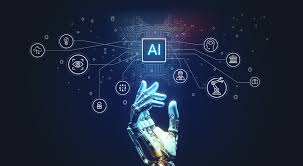
Artificial Intelligence (AI) is one of the most revolutionary technologies of the 21st century. It refers to the ability of machines and software systems to simulate human intelligence and perform tasks such as learning, reasoning, decision-making, language understanding, and problem-solving. AI is rapidly changing the way businesses operate and how people interact with technology in everyday life.
Today, AI is widely used in various industries. In healthcare, AI helps doctors diagnose diseases faster and more accurately. In e-commerce, online platforms use AI algorithms to recommend products based on customer preferences and browsing history. Banking systems use AI for fraud detection, risk management, and customer service chatbots. Educational platforms use AI to create personalized learning experiences for students.
One of the major advantages of Artificial Intelligence is automation. AI can handle repetitive and time-consuming tasks with high accuracy and efficiency. This helps businesses improve productivity, reduce operational costs, and provide a better customer experience. AI-powered virtual assistants, speech recognition systems, and smart recommendation engines are examples of how automation is improving modern technology.
Machine Learning and Deep Learning are important branches of AI that allow systems to learn from data and improve over time without being explicitly programmed. These technologies are used in image recognition, voice assistants, autonomous vehicles, and predictive analytics.
Despite its many benefits, AI also presents certain challenges. Concerns about data privacy, cybersecurity, job automation, and ethical decision-making continue to grow as AI becomes more advanced. Organizations must ensure that AI systems are developed responsibly and used in a secure and transparent manner.
The future of Artificial Intelligence is extremely promising. AI is expected to drive innovation in robotics, healthcare, transportation, cybersecurity, and software development. Smart cities, self-driving cars, and intelligent automation systems are becoming more realistic because of advancements in AI technology.
In conclusion, Artificial Intelligence is transforming the digital world and creating new opportunities across industries. As AI technology continues to evolve, it will play an even bigger role in improving efficiency, innovation, and human productivity in the future.
Comments
No comments yet. Be the first to comment.